People drink wine with food. This is not a new or surprising fact, however according to consumer research* ‘Eating a main meal’ is the most popular wine consumption occasion. ‘Spending time with family’ and ‘Spending time with partner’ are also key occasions for wine, meaning that wine plays an increasingly prominent role at this time of year as people are spending more time eating out and catching up with their loved ones.
A good food and wine match is when the flavours seamlessly integrate to enhance the dining experience. The very first step for any good wine recommendation is to find out from the customer what kind of wines they like and what price range they are looking at, as this will dictate the direction you take with the selection.
Wine is highly subjective, and when choosing a wine to go with their meal customers are looking for something they can savour and enjoy that will go well with the food. Sounds pretty simple, right? Yes, and no.
With a diverse range of quality Australian wine available we are spoilt for choice, but this can also make the process overwhelming. Whether it is sparkling, white, rosé, or red, there is a wine that will perfectly match your seafood dishes. Here are some tips to help you navigate your way through this festive season.
The seafood
When matching wines with seafood, consider not only the style and delicacy of the seafood itself, but also the sauce and other elements in the dish. Look for a wine that has a flavour profile, body and texture that suits the complete meal on the plate.
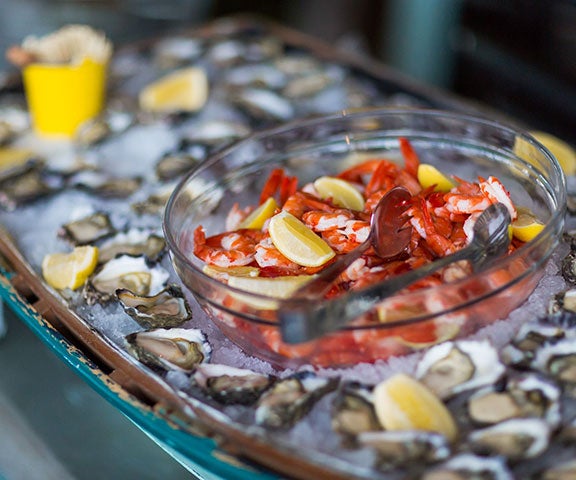
Fresh oysters and Australian Sparkling wine are a great combination because the wine’s acidity cuts through the richness of the oysters and the lively bubbles complement their delicate texture. Any wine high in acidity will also work well – try a splash of Semillon on the oyster for an explosion of flavour.
For light, fresh seafood dishes such as grilled prawns or a seafood platter, Riesling is a highly versatile option. With its crisp style and zesty acidity, think of it like adding a bit of citrus to your dish.
Other crisp and refreshing wines including Pinot Grigio, Sauvignon Blanc, Fiano, or a dry Rosé are also great options for grilled or barbecued seafood.
If the dish has a heavier, creamy sauce, a Chardonnay with its creamier flavour profile and full-bodied texture will complement the dish better. There is a wide range of Chardonnay styles available, so be familiar with the different options on your wine list to enhance your food matching recommendations. Chardonnay also works well with creamy curries, like yellow curry.
For seafood dishes with a bit of spice, consider a richer style wine like a Grüner Veltliner.
Wines with herbal notes such as Sauvignon Blanc or Pinot Noir match well with smoked salmon.
Pinot Noir and other lighter style red wines also work well with medium-bodied fish, particularly if your dish has a ‘meatier’ texture.
Ultimately there are a wide range of wine options available, and the key is to determine what your customer is looking for and understand the flavours you are working with.
Other considerations
Budget
Budget is often aligned with occasion and can vary greatly depending on your customers’ confidence with wine. There are quality Australian wines at all price points, and the customer will have a more enjoyable experience if you stick to their budget, and may be more inclined to order another bottle….
Experience
It is important to give the customer confidence in their wine selection and providing a few points of interest on the chosen wine can really enhance their overall dining experience.
Depending on the venue, it is not necessary to have a different style of wine glass for every variety, however having a good sparkling, white, and red wine glass option will help to bring out the flavours in the wine and add to the quality cues for both the venue and the wine.
Ensure the correct serving temperature. Sparkling and crisp, high acid white wines should be served at between 6-8°C, Chardonnay and medium-full bodied whites 10-12°C, lighter reds 14-16°C, and medium-full bodied reds 17-18°C. In warmer climates, consider cooling red wine bottles slightly to avoid hot ‘cooked’ wine flavours.
Adventure
Over the past 4 years, varieties such as Sauvignon Blanc, Prosecco, Pinot Gris/Grigio and other white wine varieties have been an increasingly popular choice for On-Premise consumption occasions in Australia, with dessert wine and Pinot Noir also trending upwards in the 12 months from July 2023 – June 2024*.
Having a range of options on the wine list across varieties and price points will ensure you have something to suit your customers’ needs, and this may also include lower alcohol options. While consumption of no- and lower-alcohol wine is currently low, it is expected to grow over the next five years, driven by younger wine drinkers.
Wine and food matching is as much an adventure as it is a science. If you remember the key principles and understand your customers' taste preferences and budget, you are well on the way to great food and wine matching this festive season.
*Source: Growth Scope 2024